



Finding Your Voice Through Language
English at Marvelwood is rooted in conversation, curiosity, and connection.
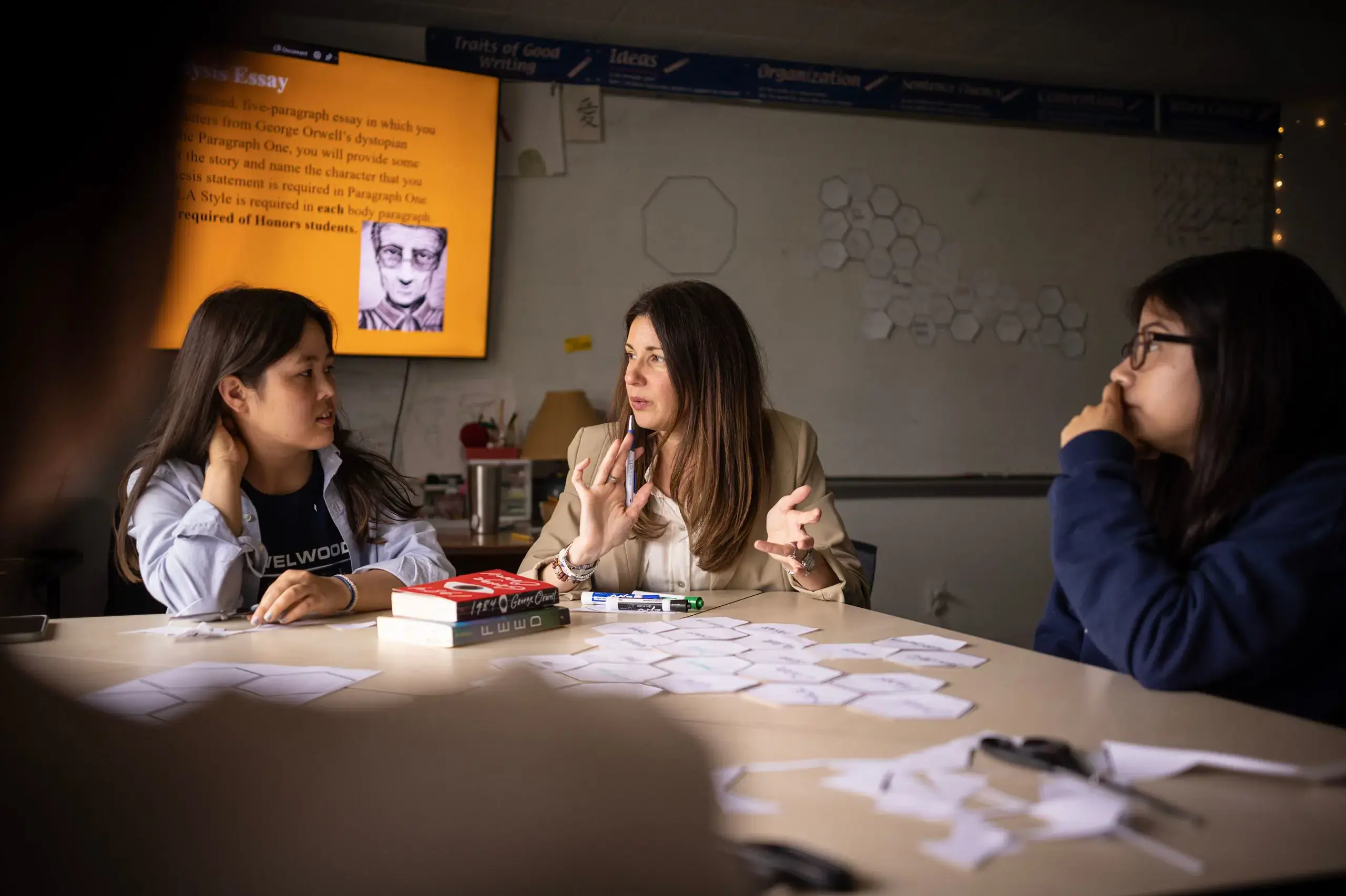
In small, inclusive classes, students engage deeply—with faculty, their peers, and the material. Our passionate teachers make literature and language accessible, interesting, and relevant, helping students explore new perspectives, examine complex questions, and discover how stories—both written and spoken—shape the way we understand the world and ourselves.
“The Humanities and English matter greatly today, perhaps more than ever. They’re central to the development of humane thinkers, workers, and leaders in an increasingly automated and complex world.”
- English Faculty
Teaching for Student Growth
No two students start in the same place, which means we measure success by growth, perseverance, and progress—not by comparing students to each other. Our curriculum builds skills progressively from freshman through senior year, helping each student develop as a reader, writer, speaker, listener, and thinker.
Writing instruction is intentionally scaffolded. By breaking complex assignments into manageable stages—from the spark of an initial question to the finality of a well-supported conclusion—students learn to approach complex assignments with confidence rather than anxiety. The result? Graduates who don’t just summarize stories, but who can articulate original ideas, listen with empathy, and write with undeniable clarity.
 | Student-led LearningLearning comes alive through peer workshops, student-designed projects, and Socratic seminars. Students—not just teachers—guide the conversation, posing questions that drive deep analysis. This student-led environment ensures that every voice is heard and valued while giving students ownership of their learning. |
Bringing literature to life
Students study British, American, and World Literature across genres, cultures, and historical periods. Exploring new worlds ignites deeper insights into their own. Literature becomes a space to examine actions and consequences, explore identity, and connect themes from the past to the realities of today.
Projects such as investigative “crime scene” analyses of Shakespeare’s Romeo and Juliet invite students to gather textual evidence, collaborate with peers, and form conclusions grounded in critical thinking rather than assumption.
What Students GainThrough their experience in English, students:
|  |